
Treasures of Aztec Review: A Counter That Resets, and One That Doesn't
Treasures of Aztec is PG Soft's six-reel cascade with a multiplier that climbs by one on every winning fall and starts over on the next spin. In the free spins it opens at x2, climbs by two and never starts over, and that one clause is where the money in our log came from. Our own demo log, 2,888 paid spins at 12.00, saw the feature seventeen times and finished at 137.86% of its stakes. Pooled with the two sister logs it comes to 6,120 paid spins, 31 rounds and 125.69%. The best of those rounds climbed to x24 and credited 257.3 bets, trigger spin included. The build prints the paytable and both counters, and leaves its return, its trigger rate and its maximum to a sheet on the studio's site.
- Who it suits: players who want a cascade they can read fall by fall, a multiplier counter that stays on the screen, and a free spins round whose value climbs in front of them rather than resolving in one number
- Core mechanic: six reels paying by 2,025 to 32,400 ways, with a counter that climbs by one on every winning cascade and resets each spin in the base game, and opens at x2, climbs by two and keeps its figure through all ten free spins
- Key risk: the build prints neither its 96.71% return nor a trigger rate nor a maximum; the base game paid under a bet on half of its paying spins in our log, and two of seventeen rounds stalled at x4 and paid under three bets in their free spins
- Rating: 7.5/10
Game Information
125.69% tested, pooled on paid spins
257.3x tested, best full round (all sessions)
Where the stated figures come from
| Figure | Value | Source | Checked | In the tested build |
|---|---|---|---|---|
| Stated RTP | 96.71% | PG Soft's game page and Game Information sheet (PDF, version 1.0 r945, updated 8 July 2025): 69.59% main game plus 27.12% free spins (sheet (PDF)) | sheet and studio page read 6 October 2026 | No: no return line on any of the 53 archived screens of the build |
| Advertised max win | 100,000x | PG Soft's game page and the sheet's 'Advertised Value' line; the same sheet lists 9,071x as the largest result of a billion simulated spins (sheet (PDF)) | studio page 6 October 2026 | No: the build prints no maximum |
| Volatility | Medium | The sheet's 'Session Volatility' line; the build prints no volatility label (sheet (PDF)) | sheet read 6 October 2026 | No: no label in the build |
| Bonus trigger | 4 scatters anywhere: 10 free spins, plus 2 per extra scatter | In-game rules, restated on our rules page (rules page) | build as logged on 2 August 2026 | Yes: printed in the rules |
| Feature frequency | 0.56%, one trigger per 179 spins as we read it | The sheet's hit-rate table (Overall 29.07%, Main Game 28.51%, Free Spins Feature 0.56%); the rows add up, so we read the row as a share of spins. Our log: 17 in 2,888, one per 170; the pool: 31 in 6,120, one per 197 (sheet (PDF)) | sheet read 6 October 2026 | No: the build prints no trigger rate |
| Release date | August 24, 2020 | PG Soft's game page (page data carries 24 August 2020); third-party databases quote November 2020 (sheet (PDF)) | studio page 6 October 2026 | No: the build prints no release date |
Where a figure is our reading of a source, the row says so.
A counter that resets, and a counter that doesn't
Treasures of Aztec puts a multiplier counter under six reels and gives it two sets of rules. In the base game the counter opens every spin at x1 and climbs by one each time a winning cascade clears the board. It drops back to x1 the moment the next stake is taken. In the free spins it opens at x2, climbs by two, and keeps whatever it has reached through all ten spins of the round. The paytable, the ways and the wilds are the same in both halves of the game. The only thing that changes is whether the counter is allowed to remember, and our 2,888 paid spins at 12.00 are a test of that memory.
On paper, the studio's sheet gives the feature 27.12 of its 96.71 points, a shade over a quarter of the expected return. In the sample, seventeen rounds carried 34.84% of everything the log returned, and 79.1% of the feature's money was paid while the counter stood at x10 or higher. The base game, where the counter passed x5 on 17 spins out of 2,888, returned 89.83% of the stakes on its own. The two halves are one machine with the memory switched off and on, and the ledger on this page puts a figure on the switch. The build prints the paytable and the rule, and leaves its return, its trigger rate and its maximum to a sheet on the studio's site.
What this page cannot show
One log of 2,888 paid spins prices nothing about the long run, and the three-log pool of 6,120 spins adds returns rather than certainty. Seventeen rounds leave the feature's clock loosely pinned, from one round in 106 paid spins to one in 292 at 95%. The sheet's own figure sits inside that band without being proved by it. The ways counter above the reels opened between 2,025 and 18,750 on the paid spins of our log. The 32,400 the rules name appeared three times, each time on a board refilled at the end of a chain. Nothing in the game weights the tall symbols that set the figure, and nothing here can. The rules allow a retrigger, and none of the 31 pooled rounds produced one, which is a count of zero and not a rate. The dollar copy of the rules prices the bought round at 50 bets and withdraws the button above a 10.00 stake. Our 12.00 log never saw the button, and nothing on this page prices a bought round. Every figure below is demo credit read from the game's own settlement, frames were kept once a second, and a cascade can clear and refill between two of them.
Six reels, a seventh on top, and ways that change every spin
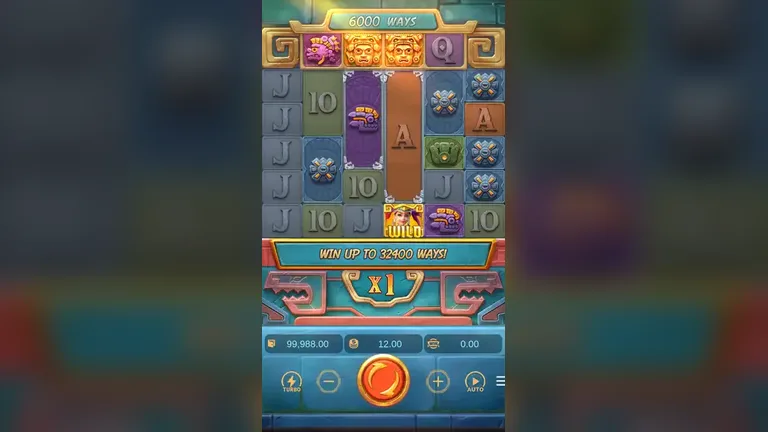
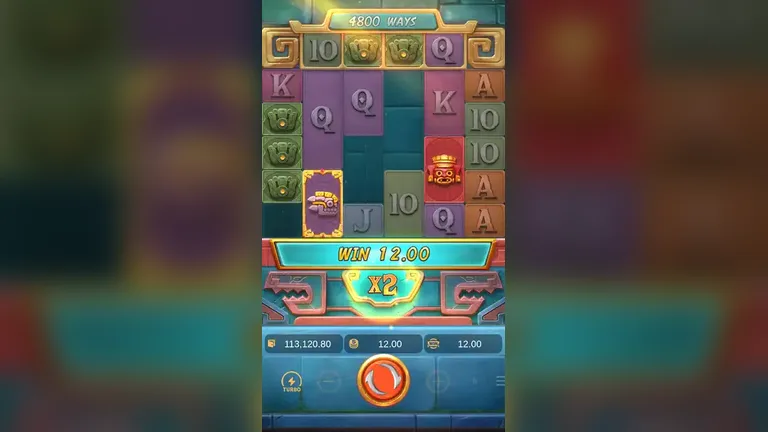
The grid is six reels of five rows, with a single extra row sitting above reels two to five, and it pays by ways rather than lines. A symbol on reels two to five can be two, three or four cells tall, and it counts as one symbol however tall it lands. The ways figure is the product of the separate symbol positions on each reel, five on the outer reels and up to six on the inner four. A tall symbol holds several cells and counts as one position, so a board of single cells reaches 32,400 and a board stacked with tall ones drops to 2,025. A symbol's own winning ways are counted apart from that figure, from its matching positions on consecutive reels from the left. The counter in the gold banner prints the figure for each new board. On the opening board of our paid spins it read 4,800 at the median and 3,375 to 5,625 on 1,407 of them. It reached 10,000 on 122 opening boards and 15,000 on only four, and the chains that followed pushed it higher, to 32,400 three times. Paytable values multiply by the bet size and level rather than by the stake, which at our 12.00 makes one way worth six tenths of the printed figure. Six gold masks on one way are 48.00, four bets; three of the lowest cards are 0.60, a twentieth of a bet. Eleven symbols pay, and the wild stands in for all of them on reels two to five.
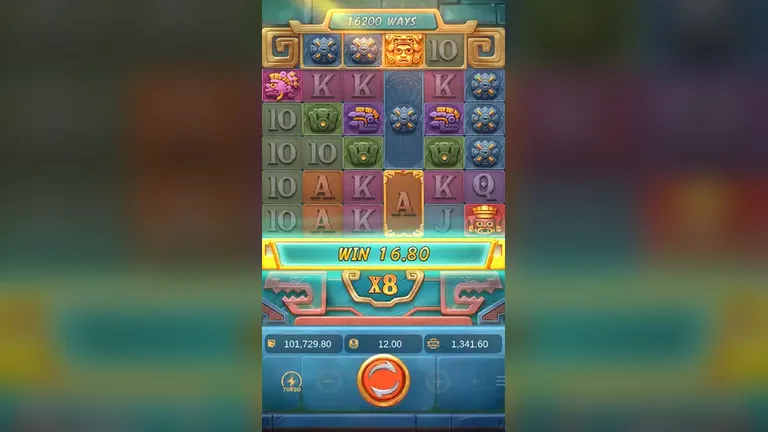
The wilds have a route of their own, and the rules name it Wilds-on-the-Way. Some of the tall symbols land inside a silver frame, and the frame is a promise. A silver symbol that takes part in a win becomes a random symbol in a gold frame when the board refills. A gold one that wins again becomes a wild on the refill after that. The route runs inside one spin and ends when a cascade pays nothing, so it rewards the long chains and does nothing for the short ones. The best base spin of the log shows the three pieces working together. It opened at 28.80 on a 4,800-way board, cleared seven times, and the fourth cascade paid 1,086.00 at x5 on a board that had grown to 11,250 ways. The chain closed at 1,341.60, 111.8 bets, with the counter at x8 and the meter at 101,729.80.
Ten free spins with a memory
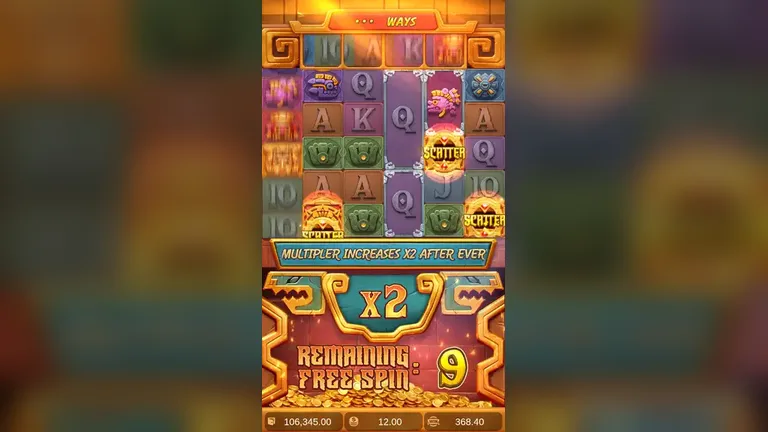
Four scatters anywhere on the board open ten free spins, and every scatter beyond four adds two. The counter starts the round at x2, climbs by two on every winning cascade, and carries its figure from one free spin to the next until the last one settles. Our log opened the feature seventeen times in 2,888 paid spins, one per 170, and sixteen rounds ran ten spins while one landed five scatters and ran twelve. The sheet prints 0.56% against the feature in a table it never defines, and read as a share of spins the row says one trigger per 179. The log is consistent with that reading, and an exact 95% Poisson interval places the rate anywhere from one round in 106 spins to one in 292 (n = 17). The waits between rounds ran from one spin, when two rounds opened on consecutive stakes, to a silence of 780 spins that filled the middle of the afternoon. Five rounds then arrived inside 158 spins late in the run, and that cluster carried the meter from 103,052.80 at the 2,000th paid spin to 110,254.60 at the 2,250th.
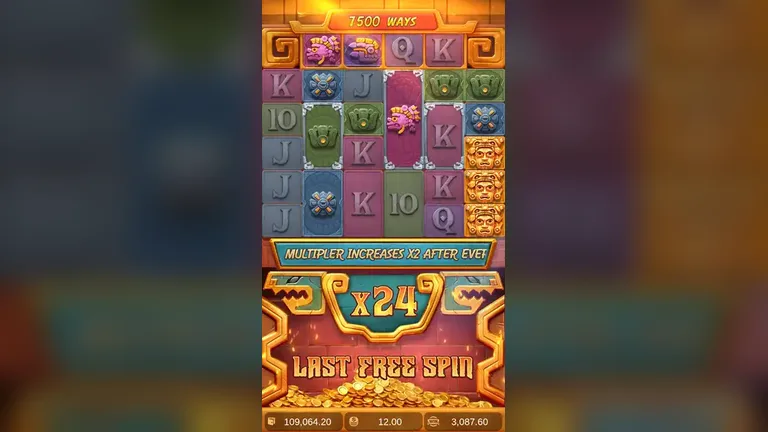
Each round below is read two ways, and the frames settle which one the game itself uses. The free spins payout is what the ten spins credited on their own. The full round adds the triggering spin's cascade win, because the game's win counter opens the round already holding that figure and keeps counting from it. On the biggest round of the log the trigger had cleared four times for 368.40 before the first free spin, and the counter on the opening frame reads exactly that. All seventeen rounds reconcile against the wallet to the cent on both readings.
| Round | Trigger spin | Free spins | Counter peak | Free spins payout | ×bet | Full round ×bet |
|---|---|---|---|---|---|---|
| 1 | 308 | 10 | x4 | 19.20 | 1.6x | 3.2x |
| 2 | 543 | 10 | x16 | 388.80 | 32.4x | 32.4x |
| 3 | 663 | 10 | x18 | 1,053.60 | 87.8x | 88.7x |
| 4 | 706 | 10 | x14 | 462.00 | 38.5x | 38.5x |
| 5 | 776 | 10 | x18 | 322.80 | 26.9x | 31.7x |
| 6 | 972 | 10 | x20 | 2,356.80 | 196.4x | 196.4x |
| 7 | 1,752 | 10 | x4 | 26.40 | 2.2x | 2.2x |
| 8 | 2,039 | 12 | x16 | 332.40 | 27.7x | 31.1x |
| 9 | 2,046 | 10 | x18 | 1,160.40 | 96.7x | 96.85x |
| 10 | 2,148 | 10 | x22 | 1,561.20 | 130.1x | 130.3x |
| 11 | 2,149 | 10 | x24 | 2,719.20 | 226.6x | 257.3x |
| 12 | 2,196 | 10 | x26 | 1,348.80 | 112.4x | 115.05x |
| 13 | 2,332 | 10 | x16 | 346.80 | 28.9x | 29.1x |
| 14 | 2,449 | 10 | x18 | 753.60 | 62.8x | 63.4x |
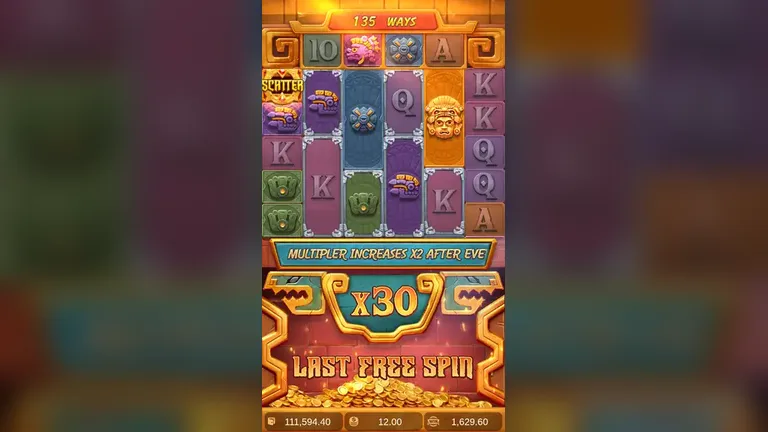
| 15 | 2,605 | 10 | x30 | 1,629.60 | 135.8x | 135.8x |
| 16 | 2,722 | 10 | x14 | 1,196.40 | 99.7x | 100.0x |
| 17 | 2,864 | 10 | x18 | 967.20 | 80.6x | 80.7x |
Trigger spin counts paid spins from the start of the log. Full round is what the wallet gained from the triggering stake to the last free spin's settlement, the trigger's own cascade win included. Where the trigger paid nothing of its own, the two readings are equal.
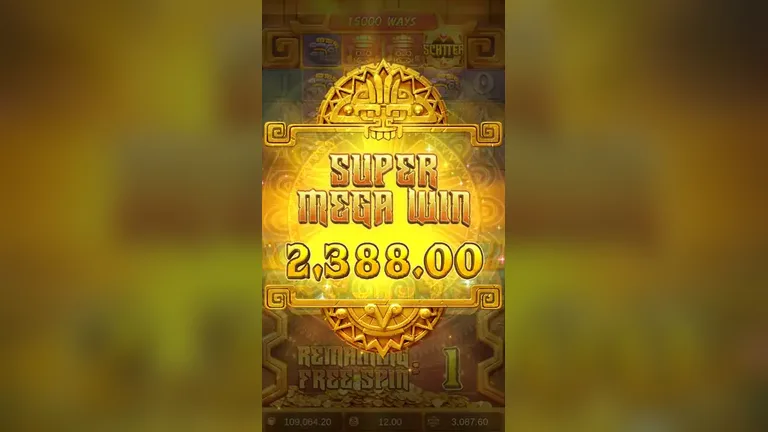
The table has one axis that matters, and it isn't the number of free spins. The two rounds whose counter stalled at x4 paid 1.6 and 2.2 bets in their free spins, from a single winning cascade each. Nothing that reached x14 paid under 26 bets, and the five rounds that reached x20 or more paid between 112 and 227 bets. The counter is a multiplier of whatever lands under it, so a high peak is necessary and not sufficient. The round that climbed to x30 closed at 135.8 bets, under the x24 round's 226.6, because its last spins landed little. The median round paid 967.20 in its free spins, 80.6 bets, and the mean sat at 81.6. Of the 172 free spins in the log, 97 paid nothing and 75 paid something. The median paying free spin returned 78.00, six and a half bets, and 59 of the 172 returned the stake or more. The single largest free spin of the log paid 2,388.00, 199 bets, collected at x18, x20 and x22. The game's banner called it a Super Mega Win, which is the sheet's name for anything over fifty bets.
The base game, one cascade at a time
Between the rounds the game paid on 950 of 2,888 paid spins from the base game, 32.89%, against the 28.51% the sheet gives its main game. Five more spins opened a round without paying anything of their own, so 955 spins returned something in all, 33.07%. The counter is why the payouts look the way they do, and it's also why most of them are small. A winning board clears and refills, the refill is paid at x2, and a chain that keeps clearing keeps climbing. Three fifths of the base game's money arrived on cascades at x2 or above, and only 1.7% above x5. Whereas the feature pays by the counter's memory, the base game pays by the length of one chain, and most chains are short. Of the 950 paying spins, 491 returned less than a bet and 158 between one and two. Another 174 sat between two and five bets, 111 from five to twenty, and sixteen above that. The median paying spin returned 10.80, nine tenths of a bet, and 471 spins in the whole log, 16.31%, returned the stake or more.
The longest stretch with nothing back lasted 17 spins, the shortest among this portal's PG Soft logs, where Fortune Tiger's ran 19, Speed Winner's 22 and Forge of Wealth's 24. The balance still fell 2,461.80 from its running peak of 105,268.60, 205 bets, between the 1,355th paid spin and the 2,035th. The seventh round's 26.40 fell inside that slide and did nothing to stop it. A base game that pays a third of the time and under a bet at the median keeps the meter moving without keeping it level. Seventy spins stopped with exactly three scatters on the first board, one short of the feature, which is a count the game makes visible and prices nowhere. The base returned 31,131.60 against 34,656.00 staked, 89.83%, which is twenty points above the 69.59 the sheet budgets for it and still a loss between the rounds.
Three sessions, 6,120 paid spins
The SlotLab testing team holds three Treasures of Aztec ledgers, and this portal's is the longest of the three, under Session ID TOAZ-20260802-01. The network's two dedicated Treasures of Aztec sites logged the other two in July, at the same 12.00 stake and on natural triggers. All three count paid spins only, since the free spins carry no stake, and all three settle on the game's own balance readings, so the pool is plain arithmetic. Added together they put down 73,440.00 and took back 92,306.40 over 6,120 paid spins, a combined 125.69%. Thirty-one rounds across the three logs give a pooled clock of one per 197, with a 95% interval whose ends sit at one in 139 and at one in 291, and none of the 31 retriggered. The best full round of the pool is this portal's x24 round at 257.3 bets, and the best base spin is this portal's 111.8-bet chain.
| Source | Spins | Observed return | Feature rounds | Best full round | Net result |
|---|---|---|---|---|---|
| CasinoReview.click | 2,888 paid | 137.86% | 17, one per 170 | 257.3x, counter x24 | +13,120.80 |
| aztectreasurescasino.com | 1,659 paid | 139.07% | 6, one per 277 | 177.1x, counter x28 | +7,777.80 |
| aztectreasuresslots.org | 1,573 paid | 89.23% | 8, one per 197 | 162.2x, counter x18 | −2,032.20 |
| Combined | 6,120 paid | 125.69% | 31, one per 197 | 257.3x, full round | +18,866.40 |
Every line is read from its session's own ledger on one definition, paid spins at 12.00 and the full round as defined above. The sister pages publish the same spin counts, returns and best rounds. Both print a per-event figure (58.95% and 52.7%) that counts every settlement rather than every paid spin. On the definition used here their logs paid on 36.29% and 33.50% of spins. One spin in the aztectreasurescasino.com log has no recorded outcome, and the balance moved by exactly one 12.00 stake at that point. The line above counts it as a losing paid spin, as that site's own session log does. aztectreasuresslots.org also prints 84.0x as its best base-game result. In its log that figure is a single cascade inside a free spin, and its largest base-game spin reads 41.3 bets. Combined divides the three returns added together by the three stakes added together.
CasinoReview.click Erik Lindholm's log · August 2026
aztectreasurescasino.com Alex Reeves's log · July 2026
aztectreasuresslots.org Mia Stone's log · July 2026
Two logs closed near 138% and one closed at 89.23%, and the losing one is the useful one. It ran the same public demo at the same stake for 1,573 spins, opened eight rounds, and still gave back a tenth of its stakes. Its rounds peaked lower, and its base game paid 66.51% of stakes where ours paid 89.83%. The three hit frequencies sit within four points of each other, 33.07%, 36.29% and 33.50%, and the three clocks sit inside each other's intervals. What the three logs disagree about is money, and money is what a few thousand spins of a medium-volatility cascade cannot settle.
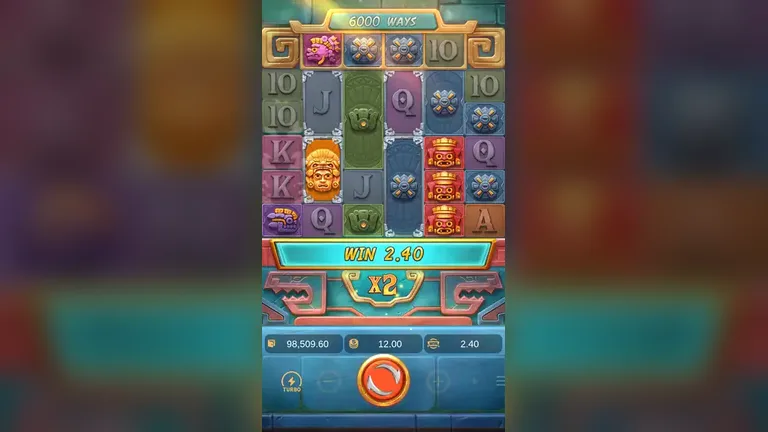
TOAZ-20260802-01 · Evidence retained: 14,405 timestamped frames plus the full session log. Read the session report: TOAZ-20260802-01. Frames beyond its tables are available on request through the contact form.
The return, on the sheet and on the studio's page
The build prices every symbol, describes the counter twice and the free spins twice, and prints a 50-bet price for the bought round in its dollar copy. Across 53 archived screens, fourteen of them paytable and rules, no return line appears, no trigger rate and no maximum, and all three sit with the studio. The Game Information sheet PG Soft publishes (version 1.0 r945, last updated 8 July 2025) sets the theoretical return at 96.71%, 69.59 points of it from the main game and 27.12 from the free spins. The frequency table beside it lists 28.51% for the main game and 0.56% for the feature under a 29.07% top line. The two rows sum to the top line, so I take spins as the denominator of both and read the feature row as one trigger in 179. The sheet itself neither confirms that reading nor defines the denominator it uses. The game's page on the studio's site carries the same 96.71% beside a 100,000x maximum. The sheet prints that 100,000x as an advertised value and, on the row above it, prints 9,071x as the largest result of a billion simulated spins. Both figures come from the studio, both are absent from the build, and the gap between them is the clearest thing the sheet says.
Our own session returned 137.86% on paid stakes and the pool of three 125.69%, and neither figure is a rate of anything the game will do next. Both are warm afternoons drawn from a distribution that the sheet sketches and the screens keep out of sight. Our log needs no correction of the kind the Fortune Tiger ledger did. This build reports each cascade and each free spin as a step of its own with the stake at zero. The 2,888 stakes it records are the 2,888 the wallet paid. The configuration a casino licensed is readable only on that casino's info screen, where the copy prints one.
Editor's note: reading the RTP numbers. The stated return for this title is the studio's own figure, 96.71% on the game's page at pgsoft.com, with the split in its Game Information sheet. The tested build prints no return line, so neither source confirms the configuration of the copy we logged. Our tested figure is the pooled return of the logged demo sessions behind this review, so the two numbers answer different questions, and even a pooled sample of a few thousand spins is not the game's long-run maths. By money it is 92,306.40 returned over 73,440.00 staked on paid spins across three sessions, and this portal's session alone returned 137.86%. Live RTP is an operator choice: many games ship in several RTP configurations and the casino picks which one to run, so always check the RTP in the game's info screen before you bet real money. More in our guide to observed and stated RTP.
Speed Winner, the same board with a different counter
The nearest machine to this one on our shelf is the studio's own Speed Winner, and the two share a chassis. Both run six reels in a five-six-six-six-six-five arrangement, both float between 2,025 and 32,400 ways, both clear winning symbols and refill, and both open their free spins on four scatters. What differs between the two is the multiplier, and the difference runs through everything else. Speed Winner lands tiles marked x2 to x10 and sums every visible tile into one figure at the end of the spin, applied once to the whole win. Treasures of Aztec keeps a counter that climbs with each winning cascade and multiplies each cascade as it lands. A long chain is paid at rising rates rather than at one rate at the close. Speed Winner's feature starts at eight spins where this one starts at ten, and its bought round costs the same 50 bets with a higher stake limit.
Our Speed Winner log opened its feature once per 230 paid spins, and seven of its twelve rounds paid under 40 bets while two passed 100. Here the clock ran one per 170, the rounds paid 80.6 bets at the median in their free spins, and five of seventeen passed 100 on that reading. Speed Winner's one 841-bet round was the kind of outlier a summed tile can produce, and nothing in 31 pooled rounds here came near it. Its base game paid on 27.06% of paid spins against 32.89% here, and small wins weigh on both: 44% of Speed Winner's readable wins came in under the stake, and 51.7% of the paying spins here did. The two logs say nothing about which engine is the better maths, and they say a good deal about which is the better watch. The summed tile resolves in one number at the close; the climbing counter shows its work on every fall. I would expect the same two shapes on a second log of each, and nothing more than that.
What the player sees
The build runs in portrait and the reels take the top half of the phone, with the ways banner above them and the counter below. A winning cascade is drawn as a clearance, and the tall symbols drop in and settle. A silver frame turns gold and then turns into the game's wild in front of you, which is the one animation worth watching. The counter changes its figure on a flash, and the Big Win, Mega Win and Super Mega Win banners climb over the reels while the wallet waits. Most of a session is quieter than that: short spins, a card or two cleared, 0.60 or 2.40 settling at x1 or x2. At turbo pace a paid spin and its cascades took five seconds on average across the log, rounds included, so 2,888 spins filled four hours and ten minutes. I can't speak for the sound, which the log didn't carry. As drawing it is bright and crowded and reads clearly from arm's length. The counter is the only number on the screen a player needs to follow.
What the ledger suggests
- The feature decided this session, and the counter decided the feature. Seventeen rounds carried 34.84% of the return, and the five rounds that climbed to x20 or higher carried most of that. The two rounds that stalled at x4 paid 1.6 and 2.2 bets in free spins, and the rules don't say how often a round stalls.
- In this sample the base game paid a third of the time and under a bet at the median. It returned 89.83% of the stakes on its own, with a 17-spin longest silence and a 205-bet fall from a running peak. The next log owes that shape to nobody, and the sheet promises nothing about it either.
- Read the 125.69% as two warm afternoons and one cold one. The pool is plain arithmetic on the three ledgers' totals, and the sheet says 96.71%. The log that lost a tenth of its stakes ran the same public demo at the same stake.
- Age limits hold on demo credits as they hold on money, 18+, and nothing on this page was logged on anything but a demo wallet.
The demo, the rules and the two sister logs
A demo wallet is the reason every log here runs on the studio's public demo: its ledger can be read back after every spin and published, as our methodology page sets out. On our shelf the Treasures of Aztec build runs inside the page from the public demo address our log used. The network's two dedicated Treasures of Aztec sites publish the other two logs, with a playable build on each. aztectreasurescasino.com carries Alex Reeves's 1,659-spin session with the x28 round, and aztectreasuresslots.org carries Mia Stone's 1,573-spin session that closed at 89.23%. Their figures on this page come from their logs and were checked against those pages on the day this review was written.
The counter climbs in front of you on the Treasures of Aztec demo page, which runs the provider's current public build. The rest of the builds we have logged sit on the Demo Shelf, one card each beside the figures their logs produced.
The paytable at 12.00, both counter rules and the bought round's printed price are restated on the Treasures of Aztec rules page, alongside the screens that carry them.
Treasures of Aztec FAQ
What is the RTP of Treasures of Aztec?
No return figure appears on any paytable or rules screen of the tested build. PG Soft lists 96.71% on the game's page at its site, and the downloadable sheet divides it into 69.59% for the main game and 27.12% for the free spins. The configuration a casino runs is the casino's choice, and the info screen of that copy is the place to read it. Our own log closed at 137.86% on 2,888 paid spins, the pool at 125.69%, and both are afternoons rather than a rate.
How do the free spins trigger, and how often?
Four scatters anywhere on the board open ten free spins, and each scatter beyond four adds two more; one of our seventeen rounds landed five and ran twelve. No trigger rate is printed anywhere in the tested build, on any screen. The sheet's 0.56% feature row sits in a table the sheet never defines, which we take to mean one spin in 179. Seventeen rounds arrived across our 2,888 paid spins, a round every 170 on average, and the three-log pool holds 31 across 6,120, one every 197.
How does the multiplier work in the free spins?
It opens the round at x2 and rises by two every time a winning cascade clears the board. It keeps its figure from one free spin to the next until the round ends. In the base game the same counter opens at x1, rises by one, and resets on every new stake. Our seventeen rounds peaked between x4 and x30, most of them at x14 to x18. The two rounds that stopped at x4 paid under three bets in their free spins, and the five that reached x20 paid 112 bets or more.
Is 100,000x really the maximum win?
The studio's page and its sheet both print 100,000x as the advertised maximum, and the tested build prints no maximum at all. The same sheet reports 9,071x as the largest result of a billion simulated spins. The largest full round in our three logs was 257.3 bets, and the largest base-game spin paid 111.8 bets.
Can you buy the free spins?
The rules print a Feature Buy at the price shown in its menu, 150.00 at a 3.00 stake in the dollar copy, fifty bets. The same rules make the button available only up to a 10.00 stake, and our 12.00 log never saw it. All 31 rounds in the three logs came from scatters landing in play.
Can I play Treasures of Aztec for free?
Yes. The public PG Soft build runs on demo credits on our Demo Shelf, and its paytable and rules sit behind the menu button. A short run can pass without a round, and the average above says nothing about any one sitting. The 18+ rule is the same on demo credits as on money.
My reading
Treasures of Aztec is the richest mechanism PG Soft has sent across this shelf, and it shows its work on every fall. The counter is public, the frames change colour in front of you, and the ways figure is printed for every board. The whole of a round's value can be followed on the screen without arithmetic. I rate it 7.5, level with Forge of Wealth, three tenths above Speed Winner and two above Rabbit Garden, and the deductions are two. The first deduction is for disclosure, because the build prints the paytable, both counters and the price of the bought round and nothing else that matters. The return, the trigger rate and the maximum sit on a sheet and a page at the studio's site, and the maximum comes there in two figures. The second is the base game, which paid on a third of the spins and under a bet at the median. I call that a taste of mine rather than a fault of the game's. The log's blanks earn no penalty: no retrigger in 31 rounds is a count, and the sheet's 9,071x is its figure for a billion spins, not a target for 6,120. Again, this is a score in the sevens, the fourth in a row from me, and the reason is the same each time. A studio whose builds printed their return would have an eight on this page. Speed Winner sums its tiles once and pays once, and Forge of Wealth charges its cells and pays once. This counter climbs while you watch, which is the difference between a result and a process. What I liked most was the silver frame turning gold on a refill; what I liked least was reading the number that matters on a PDF.
Corrections and updates
- No corrections yet. Substantive changes to figures or facts will be listed here with their dates.
Report an error: use the contact form and mention Treasures of Aztec and Session ID TOAZ-20260802-01.

Former studio-side game mathematician: paytables and RTP models, now checked from the player's side. Full profile and method →